
"production is large"
20000 article(s) found

Challenge the industry giant whether this "intelligent coffee car" can open up the Chinese coffee market.
① has scale and market, but the chain coffee giant is dominant, and there are not many other large-scale brands. According to industry data, China's coffee consumption market in 2015, however, compared with the mature coffee market in Europe, the United States and even Taiwan, the mainland coffee market is mainly controlled by chain coffee giants, and there is no competitive format in which a hundred flowers blossom. The entry threshold of ② industry is high, and coffee culture

Do you know where coffee is grown all over the world?
● Brazil (South America), the largest coffee producer, accounts for 1/3 of global coffee consumption and occupies a place in the global coffee market. Although Brazil faces several times more natural disasters than other regions, it has enough acreage to make up for it. There are many kinds of coffee here, but its industrial policy is abundant and cheap, so

Introduction of Ecuadorian Grade A Coffee with large State-run seed value Garden
Because of the unique role of the Galapagos Islands in the course of history, the Government of Ecuador has designated the Galapagos Islands as a national park, the land is no longer allowed to be reclaimed as new agricultural land, and the introduction and use of chemical fertilizers, pesticides, herbicides and other chemicals are strictly prohibited, so coffee produced in the Galapagos Islands is recognized as a natural product. Ecuador ES Coffee South Ecuador

Description of Latin American coffee flavor, introduction of Latin American coffee
The characteristics of the flavor of Central and South America: balanced, moderately sour and mellow Central and South America is the world's largest coffee producing area, where there are numerous boutique coffees. Take Colombia, Guatemala or Brazil as an example, good coffee is enough to make people dazzling. What is the resource advantage that makes Central and South America so good? French naval officer Gabriel Ma in 1721

Starbucks different kinds of Coffee Price list Starbucks menu 2023 Top Ten Best drinks in Starbucks
Starbucks different kinds of coffee price list Starbucks is now very popular in the coffee industry. Almost coffee drinkers have never heard of Starbucks. Here are the prices and introductions of different kinds of Starbucks coffee. Espresso medium cup price: 22.00 yuan small cup price: 17.00 yuan this is the soul of coffee

A brief introduction to the market price of glossy Kenyan boutique coffee beans
Coffee cultivation in Kenya is mainly divided into two types: large farms (Estate) and cooperatives (Cooperatives). The former generally has a large planting area and has independent coffee processing facilities. Most coffee production is done by a large number of small farmers, who form coffee cooperatives. The Coffee Cooperative Society hired special managers to supervise the coffee handling of its members.
Introduction to the varieties of coffee produced by boutique coffee science
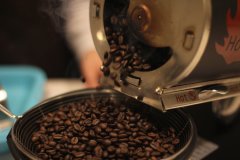
Mocha: Arabian coffee is all known as mocha and has been called the highest grade coffee in the world for centuries. But even for mocha, there are high and low, high-grade products are as follows: Wantrin, Yafei, Anaiji and so on. Mocha with the unique flavor of a lady, sweet and smooth, and has a unique aroma, mellow sour taste, suitable to match with any other coffee, straight

Characteristics of Indonesian Mantenin coffee beans with large granules and hard beans
The gentleman in coffee, Sumatra Manning, is a fine coffee bean growing in the plateau and mountain area at an altitude of 750-1500 meters. In the 17th century, the Dutch first introduced Arabica saplings to Ceylon (present-day Sri Lanka) and Indonesia. In 1877, a large-scale disaster hit the Indonesian islands. Coffee rust destroyed almost all the coffee trees and people had to put them.

KFC McDonald's Attacks Coffee Market Fast Food Giants Siege Coffee Franchises
KFC freshly ground coffee does not have a separate sales counter and seating area. At 8:30 a.m., Miss Wang, a white-collar worker on the 48th floor of Raffles Square, routinely buys a cup of coffee to the office. But on this day, she didn't choose Starbucks, which she often went to. Instead, she turned a corner and walked into a KFC restaurant from the side door. She spent 19 yuan to take out a large mocha. such a scene

Introduction of coffee production in South America | Brazilian coffee is the largest coffee producer in the world.
Brazilian Coffee is the largest coffee producer in the world. Most coffee is produced in the plains or plateau steppe regions, with an average annual temperature of 20 ℃. The climate and many flat geographical conditions can be grown in Brazil on a large scale and are used.

A brief introduction to the flavor and aroma characteristics of Kenyan boutique coffee beans
Coffee cultivation in Kenya is mainly divided into two types: large farms (Estate) and cooperatives (Cooperatives). The former generally has a large planting area and has independent coffee processing facilities. Most coffee production is done by a large number of small farmers, who form coffee cooperatives. The Coffee Cooperative Society hired special managers to supervise the coffee handling of its members.

The origin and suitable roasting degree of boutique coffee
At present, there are so many kinds of coffee beans imported from all over the world that there is no choice. Here we will introduce the main producing areas and the characteristics of coffee beans as a reference for the selection and purchase of coffee. ■ Brazil (South America), the largest coffee producer, accounts for 1/3 of the global consumption of coffee of all grades and types, and has a place in the global coffee market, although Brazil faces

Yunnan coffee bean flavor description grinding scale production area treatment manor variety introduction
Yunnan coffee bean flavor description grinding scale production area treatment manor variety introduction, the west and south of Yunnan Province are located between the 15th latitude and the Tropic of Cancer, most of the areas are 1000-2000 meters above sea level, and the topography is mainly mountainous and sloping landscape. and ups and downs, fertile soil, sufficient sunshine, rich rainfall, large temperature difference between day and night, these unique natural conditions form Yunnan small seed coffee.
How do coffee beans grow?-introduction to why coffee beans are roasted.
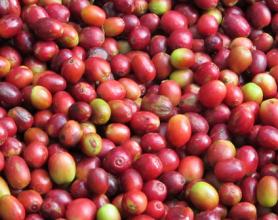
How coffee beans grow-why coffee beans are roasted introduce the origin of Robasta coffee trees in Madagascar in central, western and eastern Africa, and Indonesia in Asia, accounting for about 20% and 30% of the world's production. Robasta coffee tree is suitable for planting in the lowlands below 500 meters above sea level. It has strong adaptability to the environment and can resist the harsh climate.

Yunnan small-grain Coffee Huaguoshan Coffee Flavor description grindability treatment characteristic Variety production area introduction
Coffee cultivation in China is concentrated in Yunnan and Hainan provinces. Yunnan has a large output, with an annual output of about 26000 tons in recent years, accounting for 90 per cent of the national output. It is said that Yunnan coffee came from the French 70 or 80 years ago. The main variety is Arabica Arabica, that is, the so-called small seed coffee, commonly known as Yunnan small grain coffee. The excellent geographical and climatic conditions of Yunnan provide good conditions for the growth of coffee.

Introduction to the planting methods of the Coffee growing area in El Salvador
A brief History of Coffee production in 1742, coffee was introduced to El Salvador from the Caribbean (1740). In the mid-19th century, El Salvador's original export pillar Indigo (one of the dyes) received a gradual decline in the development of synthetic dyes in Europe, and coffee gradually became the main export product under the guidance of the government. In 1856, the first 693 bags of coffee beans were shipped to Europe. all long

The processing method of Danqi Meng Coffee introduction to the Environmental production area of Cooperative planting Manor
Beans taste different according to the region where they grow. The factors that affect the taste are the variety of coffee trees, the soil properties of growth, the climate and altitude of the cultivation garden, the care of picking results, and the process of bean treatment, etc. These elements vary from region to region, while bakers and integrated manufacturers look for the characteristics of each region, so that the comprehensive products have their own unique typical flavor. You can try to chase.

World famous Super Coffee introduction Super Blue Mountain Coffee
Super Blue Mountain Coffee details: ◆ Origin: Caribbean Central America ◆ roasting method: City Roast ◆ characteristics: mellow, full aftertaste ◆ choose Central American high-altitude coffee beans with similar flavor properties to pure Blue Mountain coffee, blending coffee from Jamaica Blue Mountain coffee producing areas, special roasting design adopts City Roast, both in flavor and taste, and pure
Which country has the best coffee?
At present, there are many kinds of coffee beans imported from all over the world, which makes it impossible for people to choose. Here, we will introduce the main origin and characteristics of coffee beans as a reference for choosing coffee. Brazil (South America), the largest producer of coffee, accounts for one-third of global consumption of all grades and varieties of coffee, and has a place in the global coffee market, although Brazil faces many challenges.

The difference between small seed, medium seed and large seed of coffee how does the brand brew flavor describe the taste
Coffee small seed, medium seed, large seed of the difference between brands how to brew flavor description taste, also known as Liberian species, for evergreen trees. The plant is tall, more than 10 meters high, the branches are thick and hard, grow obliquely upward, and the branches cork the fastest. The leaf blade is oval or round, the leathery leaf surface is glossy, the leaf end is closed, and the leaf margin is not corrugated. The fruit is large, oblong, hard and thick in skin and pulp, and navel.